
Listed most recent to oldest

Terry Clenney
Birth: December 16, 1954
Death: August 15, 1995
Obituary
Parents: Carl Richard Clenney (1924 - 2011) and Christine Robinson Clenney (1935 - )
Burial: Abbeville Memorial Cemetery , Abbeville, Henry County, Alabama, USA
Criminal Details
No Criminal Details.
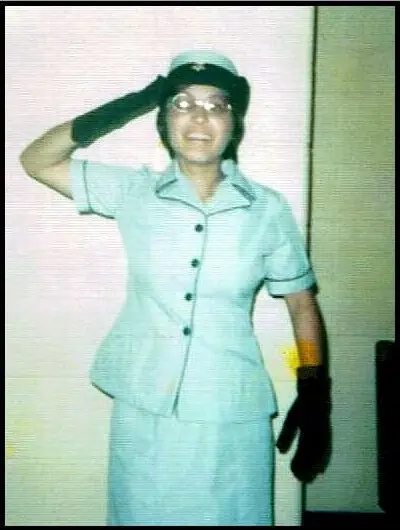
Patricia Ann Bodak Whittle
Birth: May 17, 1957
Death: May 20, 1994
Obituary
No obituary found.
Husband: Harold Daniel Whittle
Children: Amber and Lisa
No criminal information found.
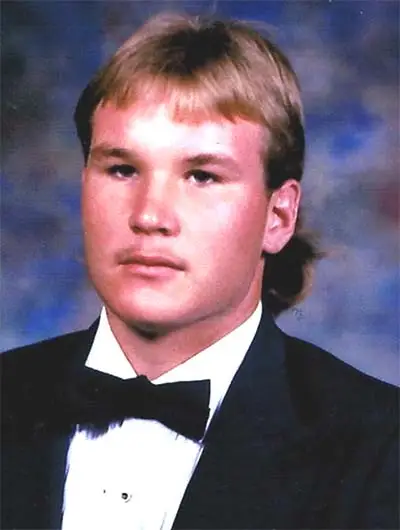
Timothy “Tim” Bolin
Birth: circa 1969
Death: October 24, 1993
No Criminal Details found
Criminal Details
NEWSSOURCE
REPORTER - PUBLISHDATE
ARTICLETITLE
ARTICLETEXT
Source: View SOURCENAME Article
Testimonials

Lanova Smith
Birth: April 15, 1973
Death: May 24, 1993
Obituary
No obituary found.
Children: Michael Smith and Candance
Mother: Jasmine Gould
Siblings: Lanora Smith and Liz Golay
Attended Enterprise High School (1993)
Criminal Details
No criminal details found

Gwendolyn D. Brock
Birth: December 31, 1970
Death: November 25, 1990
Criminal Details
DothanEagle.com
Staff Reports - Jan 10, 2017 Updated Feb 19, 2019
Parole denied for man convicted in 1990 Houston County murder
A man found living in New Orleans 10 years after killing a woman outside a Houston County nightclub was denied parole on Tuesday morning.
Vincent Lampkin, now 50 years old, had his case presented before the Alabama Board of Pardons and Paroles to request early release from prison. He is serving a 99-year sentence for the 1990 shooting death of Gwendolyn Brock, who he confronted on Nov. 25, 1990, in the parking lot of the 500 Club in the Bay Springs Community as she was trying to leave. Lampkin shot Brock in the face with a .380-caliber pistol after asking her to return a ring he had given her. Brock later died at Flowers Hospital from a single gunshot wound to the head.
Lampkin eluded police capture for almost a decade, working as a barber in New Orleans under the name of Leon David Joseph. He was arrested on an aggravated assault charge against his wife in April 2001. Fingerprints obtained by police making that arrest identified him by his real name and he was arrested again in May 2001 and charged with Brock’s murder.
During his trial, Lampkin testified he was trying to hand the gun over to Brock when it went off accidentally. However, Chris White, who was with Brock that night, testified that tensions between Brock and Lampkin had been building for several months after she broke off a two-year relationship with Lampkin in the fall of 1990. White said Lampkin confronted him and Brock at the nightclub and later order White to get out of Brock's car.
Lampkin was convicted in January 2003 and sentenced to serve 99 years in prison.
Outgoing District Attorney Doug Valeska and incoming District Attorney Pat Jones both appeared before the parole board to protest early release for Lampkin.
Source: View DothanEagle.com Article
Testimonials

Kristy Lee Wells
Birth: September 15, 1971
Death: September 1, 1990
Obituary
No obituary found.
Burial: Shelby Garden of Rest, Shelby, Shelby County, Alabama, USA
No criminal information found.

Ella Foy Cook Riley
Birth: December 26, 1921
Death: May 21, 1990
Obituary
Husband: Calvin W. Riley
Burial: Pleasant Grove Cemetery, Abbeville, Henry County, Alabama, USA
Criminal Details
The Dothan Eagle
Matt Elofson - Jul. 28, 2015
A man convicted of robbery in connection to the murder of an Abbeville woman in 1990 will spend at least five more years in prison after his parole was denied Tuesday.
Houston County District Attorney Doug Valeska said the Alabama Board of Pardons and Paroles denied the parole request by Olin Grimsley.
Valeska said a jury convicted the 65-year-old Grimsley of felony first-degree armed robbery in April 1994.
“He’s serving a life sentence and they denied his request for parole for another five years,” Valeska said.
Grimsley was convicted of robbery for his role in the robbery/murder of Ella Foy Riley on May 21, 1990.
A cigarette butt found at the crime scene tied Grimsley to the crime. No DNA testing was available at the time, but blood-type testing matched Grimsley’s. He was convicted of robbery and sentenced to life in prison.
Valeska attended the hearing to protest any possibility for parole, along with Riley’s daughter Pat Jones and some other relatives and representatives of VOCAL (Victims of Crime And Leniency).
Investigators also charged Willie McNair with capital murder. He was later convicted, sentenced to death and executed in 2009.
Birmingham News
Tom Gordon - May 14, 2009
Willie McNair, convicted of robbing, strangling and stabbing to death a southeast Alabama woman for whom he did yard work, died by lethal injection tonight as his victim's six children watched.
McNair, 44, did not look at victim Ella Foy Riley's children. He also declined to pray with the prison chaplain, made no final public statement and spent his last moments staring at the ceiling as the injection began at 6 p.m. He was pronounced dead at 6:17 p.m. by Alabama Corrections officials.
Pat Jones and her brothers Calvin, Don, John, Bobby and Wayne Riley wore buttons with their mother's photograph for the execution. The buttons said "You are not forgotten." Wayne Riley, the youngest of the sons, issued a statement afterward: "I thank God for keeping myself, my four brothers and my sister alive and in good health so that we were able to see justice finally done. I ask that you pray for my family in the coming days and for the Willie McNair family, too, for they ... have suffered for what he has done."
Wayne Riley also said: "I can forgive Willie McNair for what he did because he paid the price with his life." Later the six children gathered with other family members for a candle light vigil. Participating was District Attorney Doug Valeska, who prosecuted McNair.
Earlier in the day, the U.S. Supreme Court had turned down his McNair's final sentence appeal.
Willie McNair became the fourth person executed by the state of Alabama this year. The Abbeville man had been on Death Row since 1991 for the May 21, 1990, slaying of Ella Foy Riley. Her daughter, Jones, found her mother stabbed and strangled in the kitchen of her Abbeville home. McNair had done yardwork for Riley in the past, and other members of his family had done work for her as well.
According to a case summary, McNair and a friend, Olin Grimsley, had been doing cocaine, wanted money to get some more, and had asked Riley for $20. She turned them down, and was attacked while she was getting McNair a drink of water. According to the state's filing in the case, McNair then took Riley's purse from the kitchen counter and he and Grimsley left the house. The next morning, after Riley's body was found, McNair admitted killing her when questioned by a sheriff's deputy.
The Riley children were able to witness the execution because Gov. Bob Riley, no relation to the victim, had signed into law a bill allowing up to six members of crime victim's family to watch the perpetrator's execution. Before today's signing, Alabama law allowed only two witnesses for the victim, and only two for person to be executed.
Jones said she had written McNair a few months ago, and that in his reply, he had expressed remorse for her mother's death. Carolyn Glanton, McNair's youngest sister, said the family wanted her brother, whom they called "Chubby," to be remembered as a "happy and lovable person. "Chubby has a real good heart," Glanton said before her brother died. "If anybody . . . really knew him, they'd know how good a person he is."
McNair turned down breakfast this morning and limited himself to only sodas during the day. In his will, McNair left a check for $1.11 to one of his attorneys, Randy Susskind. McNair also left several of his belongings to fellow Death Row inmates. He gave a television to Robin Myers; a radio and headphones to Michael Ervin; a Bible to Earl McGahee; and a pair of white Nikes tennis shoes to Robert Ingram. McNair has had eight visitors during the day, including two of sisters and two of his attorneys.
Susskind and Donald Blocker, McNair's spiritual adviser, are the only two witnesses he has requested to watch his execution this evening.
McNair was the fourth Death Row inmate to be executed in Alabama this year. Another inmate, Jack Trawick, is scheduled to die on June 11 for the murder of Stephanie Gach in Birmingham.
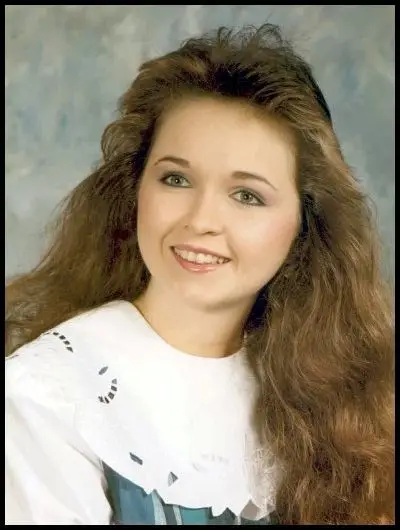
Marilyn Kay Mitchell
Birth: June 13, 1967
Death: May 15, 1990
Obituary
No obituary found.
Burial: Woodlawn Memorial Gardens, Ozark, Dale County, Alabama, USA
Criminal Details
The Dothan Eagle
Lance Griffin - Apr 26, 2012
A federal judge has denied the appeal of a death row inmate convicted of murder in the 1990 death of Dothan resident Marilyn Mitchell.
U.S. District Judge Mark E. Fuller denied the petition for a writ of habeas corpus from Artez Hammonds, convicted in 1997 of the brutal rape and murder of Mitchell. Hammonds exhausted various appeals in the state court system before attorneys filed the petition in federal court on his behalf. It took almost seven years for the appeal to work its way through the court system.
Mitchell was found dead in her Dothan townhouse on May 15, 1990, not long after graduating from the University of Alabama School of Nursing. The case remained unsolved until 1996 when the Alabama Department of Forensic Sciences conducted DNA testing on samples recovered at the crime scene. The DNA testing resulted in a match to Hammonds, who was already serving a 20-year sentence at Holman Prison for attempted murder in an unrelated case. Hammonds was charged with capital murder and convicted by a Houston County jury in 1997. He was sentenced to death.
Attorneys for Hammonds argued that his conviction and/or death sentence should be overturned for numerous reasons. Attorneys offered 25 separate examples of what they believed were incidents of ineffective counsel during Hammonds’ trial as well as his initial appeal.
Fuller declined to consider several of the examples because attorneys had failed to bring up the incidents in earlier appeals. He ruled the remaining examples did not have merit.
“That Hammonds’ lawyers had little evidence to work with hardly makes their efforts unsatisfactory,” Fuller wrote in his 100-page opinion and order. “Indeed, the overwhelming evidence of his guilt prejudiced Hammonds, not his attorneys’ performance.”
Hammonds’ attorneys also argued that Hammonds did not receive a fair trial because District Attorney Doug Valeska made a reference to Hammonds’ decision not to testify during the trial, which is improper. Trial judge Larry Anderson instructed the jury to disregard the statement and Fuller agreed with the lower appeals court that the statement did not prejudice the jury to the point of causing a mistrial.
Hammonds’ attorneys further argued that his trial lawyers could have argued mitigating factors during the penalty phase of the trial that could have kept a jury from recommending the death penalty.
Fuller disagreed.
“(Hammonds) raped and viciously stabbed to death a woman much smaller than he in a brutal, senseless and planned act of violence. Under these facts, this court can not say that had counsel presented more mitigation evidence, or better prepared the witnesses that testified, there would have been a reasonable probability that consideration of these facts would have led the jury to a different result,” Fuller wrote.
Hammonds can appeal Fuller’s ruling to the 11th Circuit Court of Appeals. If the 11th Circuit denies the appeal, he can continue the appeal to the U.S. Supreme Court.
Ken Curtis - Jul. 24, 2015
Dothan More than 25 years after a young woman was brutally murdered in her west Dothan home, the man convicted is still on death row.
“It’s not going to be long before Artez Hammonds gets what he deserves,” said Houston County District Attorney Doug Valeska who was the prosector. Hammonds’ case is pending in a federal appeals court and no execution date is set at this time.
Marilyn Mitchell, 22, was raped and stabbed 38 times May 15, 1990 as she was moving into a townhome in the Chapelwood subdivision. She had just graduated from the University of Alabama and would have begun work eight days later at a Dothan hospital. For six years, her case remain unsolved.
Hammonds, a year after Mitchell’s murder, was arrested for trying to kill another woman by stuffing her head into a toilet at a mini-storage warehouse in Dothan. “The only way she survived is to let her body go limp so Hammonds thought she was dead,” Valeska said. Hammonds was sent to prison for that crime.
A now-retired investigator assigned to the case said there are several reasons the case remained unsolved for six years. Bobby Sorrells claims Hammonds, who delivered furniture to Mitchell’s home the day before she was killed, was questioned early on but seemed to have an air-tight alibi. He also blames an FBI profile that said the man who killed Mitchell was likely white. Hammonds is black.
He also notes that a DNA match could not be obtained because inmates in Alabama, at the time, had DNA taken upon leaving prison, not when they arrived. Therefore, Sorrells said, there was no way to match the DNA until an arrest warrant was obtained after Hammonds became a suspect. He said that occurred after a forensics expert, in 1996, correctly surmised that the killer was black.