
Listed most recent to oldest
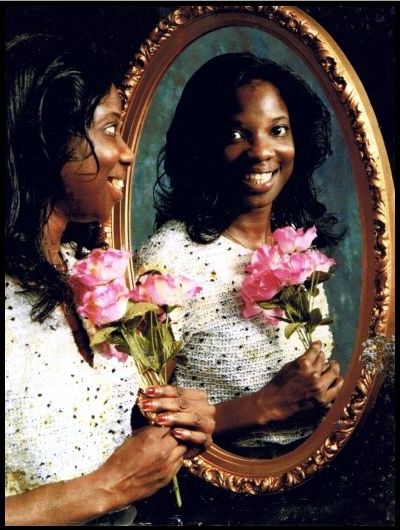
Cynthia Gail Wilson
Birth: abt 1955
Death: September 1999
Obituary
No obituary found.
Daughter: Latasha Miller
WTVY.com
Ken Curtis - July 6, 2015
View WTVY.com article
Dothan It’s been nearly 16 years since the body of Cynthia Gail Wilson was found in a remote area less than a mile from Ross Clark Circle. Her remains were discovered just off Columbia Highway after police received an anonymous telephone tip.
“There’s always a chance any cold case can be solved,” said Police Lt. Scott Long, who was a young investigator at the time. Long, today, supervises the Criminal Investigation Division of the department. “We spent many, many hours out here processing this particular scene.”
Wilson is believed to have been dead for nearly a month when her decomposing body was discovered October 8, 1999. Police say they received a tip from a pay phone caller telling them where the body was located. The man claimed he was picking up aluminum cans when he spotted it.
WTVY news files reveals the man called a second time after police issued pleas through the media that he do so. Both calls originated outside convenience stores but the man who placed them was never located. Police, at the time, said he was not considered a suspect in Wilson’s killing according to a news report filed by Wayne May who is now WTVY’s assignment manager.
Wilson’s daughter, Latasha Miller, was in her early 20’s at the time her mother was killed. She revisited the murder scene Monday---brush had grown so thick over the years it was difficult to locate the cross.
What is not difficult for Ms. Wilson is remembering the day she learned of Wilson’s death. “We were at my sister’s house and we were all just sitting around when we got the phone call and I was just in shock,” she recalled.
Cynthia Wilson, 44 years at the time of her death, was last seen four weeks before her body was discovered. She was last seen in the 600 of East Newton Street talking to person police have never been able to identify.
Long said it’s unclear if Wilson was killed where her body was found or murdered elsewhere and the body dumped at the site. In fact, Long said the remains were so decomposed that the way she was murdered has never been determined though natural causes and suicide have been ruled out.
“The fact so many years have gone by troubles us a great deal because that person has not been brought to justice. “It’s personal to me, especially since I was one of the initial investigators assigned to the case,” Long said.
Hilton Green 'J.B.' Beasley
Birth: July 31, 1982
Death: August 1, 1999
Obituary
J.B. Hilton Green Beasley, 17, of 205 Woodleigh Drive, died Sunday, August 1, 1999 in Dale County.
Funeral services will be held 4 p.m. Friday, August 6, 1999 at First United Methodist Church with Dr. Lawson Bryan and Deacon Harold Grant officiating. Burial will follow in Sunset Memorial Park with Byrd Funeral Home directing.
In lieu of flowers memorials may be made to First United Methodist Church, Family Assistance Fund, 1380 West Main Street, Dothan, Alabama, 36303, in honor of Alan Livingston and Family.
J.B. was born July 31, 1982 in Troy, Alabama. She moved to Dothan in 1984 and was entering her senior year at Northview High School.
J.B. was an All American Cheerleader in the 8th grade at Carver Middle School. She was active in dance for the past ten years and was the recipient of numerous dance trophies and awards. She was a member of the First United Methodist Church and was active in numerous other activities.
Survivors include her father, Hilton Lanier Beasley, Petrey, Alabama; her mother, Cheryl Burgoon, Dothan; her step-father, Joey Burgoon, Dothan; four sisters, Jayme Burgoon, Jacqui Burgoon, Jo Beth Burgoon, Jillian Burgoon, all of Dothan; a half-sister, Lee Zue Beasley, Mobile; her grandmother, Frances Beasley, Luvern; several cousins, aunts and uncles also survive.
Serving as active pallbearers will be Joey Burgoon, Chad Turner, Ronny Turner, Jason Kirkland, Danny Efurd and David Stout.
J.B. was predeceased by a sister, Lily Beasley.
Burial: Sunset Memorial Park, Midland City, Dale County, Alabama, USA - Plot: Garden of Peace, Lot 310-B, #1
Criminal Details
ago.alabama.gov
July 19, 2017
On Saturday, July 31, 1999, JB Hilton Green Beasley, white female and Tracie Hawlett, white female, both 17 years of age, were reported missing to the Dothan Police Department by family members. The girls were reportedly headed to a party and were last seen in Ozark, Alabama. At about 9:00 A.M. on Sunday, August 1, 1999, the vehicle they were traveling in, a black Mazda, was located on Herring Avenue in Ozark by the Ozark Police Department. It was later determined that both girls were deceased in the trunk of that vehicle; both were victims of apparent homicide.
Anyone with information on these murders is urged to contact the Alabama Attorney General’s Office, Cold Case Unit Toll Free Tip Line at (866) 419-1236 or email [email protected]. You could be eligible for a reward.
WebSleuths.com
DimeDective - March 5, 2013
I've been researching this case for the past couple of months. I've organized all the facts uncovered thus far into a sort of case file, which follows in its entirety. It is my hope that this will provide a foundation on which we can build, ignite a new conversation and bring some much-needed attention to this ice-cold case. —DD
1. ON THE WAY TO A BIRTHDAY PARTY
At approximately 10:00 p.m. on the night of Saturday, July 31, 1999, Northview High School incoming seniors J.B. Hilton Green Beasley, 17, and Tracie Jean Hawlett, 17, left their hometown of Dothan, Alabama, together in Beasley’s 1993 black Mazda 929. It was Beasley’s 17th birthday, and the friends were headed to a “field” party for her at the rural home of Beasley’s friend and fellow dancer Janna Hare in Headland, about 10 miles north of Dothan.
Earlier that evening Tracie Hawlett had finished her shift in the menswear department at J.C. Penney, left work shortly after 9:00 p.m., and went home to change clothes before Beasley, of 205 Woodleigh Road in Dothan, arrived to pick her up sometime between 9:45 and just past 10:00 at her house in the Hickory Hill Drive/Rock Spring Road neighborhood in Dothan.
The girls never arrived at the party. Carol Roberts, Tracie Hawlett’s mother, said, “They never found the party. They just couldn’t understand the directions.”
2. LOST
Beasley and Hawlett were spotted in Headland at about 10:30 p.m. Police records show that they stopped at a BP gas station near the intersection of Routes 173 and 431 in Headland, where they used one of two side-by-side pay phones to call friends, probably to get clearer directions to the party or possibly to tell friends they wouldn’t be able to make it: Hawlett’s curfew that night was 11:30 p.m., giving the girls a relatively short night out given their departure time, made all the shorter by their becoming lost.
One hour later, just after 11:30 p.m., Beasley and Hawlett turned up in Ozark -- more than 20 miles northwest of Dothan -- at the Big/Little convenience store-Chevron station located at 763 East Broad Street. The store had closed for the evening. Beasley and Hawlett encountered a woman, Marilyn Merritt, and her daughter, who had stopped to buy a soda; the girls asked for and were provided directions to U.S. Highway 231, which would take them the 20 miles southeast to Dothan. Merritt and her daughter later told police that Beasley’s car was spotless, the girls were clean and nothing seemed awry.
Using the pay phone at the far right end of the store front, Tracie Hawlett then called her mother to say they had gotten lost and wound up in Ozark but had gotten directions and were on their way home. Carol Roberts stated, “Nothing was wrong in Tracie’s voice. It was ‘Mom, I love you. Be home soon.’”
Merritt and her daughter then saw Beasley and Hawlett pull out of the parking lot and turn right toward the highway, as directed. It was the last time Beasley and Hawlett were seen alive.
3. THE NEXT MORNING
Exhausted from a double shift as a nurse's aide at Wesley Manor nursing home, Carol Roberts fell asleep after the call from her daughter. When she awoke at 5:00 a.m., Tracie had not returned. Of Tracie’s failure to return that night, Roberts stated, “Tracie’s never late. I knew that something beyond her control was keeping her from getting home.”
At 8:00 that morning, August 1, 1999, Roberts called Dothan police. Officers started to search for a possible car wreck.
At almost that exact moment, Ozark police officers found Beasley's black Mazda 929 just before 8:00 a.m., parked along Herring Avenue, about 30 yards from the James Street intersection, less than a mile from the pay phone Hawlett had used the night before. Though a residential street, the stretch of Herring Avenue where the car was found is houseless, flanked by dense woods on both sides. It is dark in the daytime and near pitch-black at night.
4. THE CAR
According to police, when the car was initially found, there were no outright signs of foul play. Police say why the girls stopped remains a mystery. They say it doesn't look like someone forced the girls off the road, since there was no damage to the car.
Though undamaged, the car was muddy and almost out of gas despite a fill-up the day before. When police found the car, the driver's side window was rolled down a few inches and the door was unlocked. J.B. Beasley’s driver's license was on the dashboard. The girls' purses were inside the car. It appeared only the car keys were missing.
5. "SOMETHING ABOUT THIS FEELS FUNNY."
Lieutenant Rex Tipton, the chief of detectives with the Ozark Police Department, was contacted by a sergeant at the Herring Avenue scene and told about the discovery.
“I don't know why I'm bothering you," the sergeant said, "but something about this feels funny.”
Tipton told the sergeant to keep an eye on the car, figuring that teenagers may have left it there after a night of partying, which would not have been unusual. The sergeant ran the car's license plates and discovered that it was registered in Dothan, the region's largest city with just under 60,000 people. He contacted police there.
The Dothan police told Tipton they were just then taking a missing person's report from Tracie's parents.
Tipton reiterated his order to keep an eye on the car.
“At that point," Tipton said, "I didn't think about popping the trunk. There was nothing to indicate anything was wrong.”
6. INSIDE THE TRUNK
Hours passed with no sign of the girls. By lunchtime, Tipton had become worried. Dothan police sent an investigator, who planned to have the car towed back to Dothan. As officers waited for a tow truck, the Dothan investigator noticed that he could open J.B.'s trunk with an inside lever; the missing keys weren't needed.
Six hours had passed since the discovery of the car. It was nearing 2:00 p.m. when he popped the trunk:
J.B. Beasley and Tracie Hawlett were inside, each dead from a single 9mm gunshot wound to the head.
7. CRIME SCENE DETAILS
They were clothed and showed few signs of struggle. Hawlett's arm was scratched, her pants had briars, and the $95 New Balance tennis shoes she had bought the week before were covered in mud. First into the trunk, she had been shot once in the temple.
Beasley had been shot once in the cheek. She was noticeably dirty; her shoes were muddy.
Both girls’ pants were wet below the knee.
A single 9mm shell casing rested precariously on Hawlett’s leg.
Robbery was quickly ruled out as a motive when it was confirmed that not only the girls’ purses but also their jewelry, money, and credit cards were all found inside the car.
The only known missing item is Beasley’s key chain, which holds the car’s keys. It is described as having white blocks with black letters that have a heart on one and spell out “HARD2GET.”
An autopsy revealed that the girls had not been raped and had no alcohol or drugs in their bodies.
Authorities were able to determine that the girls had not been murdered where the car was parked on Herring Avenue.
A palm print was recovered from the trunk lid.
More than two months after the crime, a stunning revelation came from state forensics examiners: They found semen on J.B. Beasley’s bra, panties, and skin. Authorities consider this discovery the key to the unsolved murders.
"You have to assume it's a sex offense, or at least came out of a sex offense," said David Emery, the district attorney of Dale and Geneva counties. "If we could find who donated that semen, I think we'll have the killer.”
8. THE STRANGE CONFESSION OF JOHNNY WILLIAM BARRENTINE
At 11:30 p.m. on the night of July 31, 1999, at the same time Tracie Hawlett called her mother from the Big/Little Store pay phone, 28-year-old part-time mechanic Johnny William Barrentine told his young wife that he was headed out to buy milk for the couple’s 2-year-old son.
Barrentine didn’t return home until shortly before 1:00 a.m., and, according to his wife, when he came in he was visibly upset. When asked, he told her his car had been “hit by a black truck with a Dothan tag near Herring Avenue.”
In the days that followed, Barrentine would confide in others that he knew something about the murders of the two teens found on Herring Avenue . “He just said he thought he might know who did it,” said Avalyn Murphy, whose boyfriend, Leon Jordan, encouraged Barrentine to go to authorities and collect the reward.
Barrentine finally took the advice.
On September 1, exactly one month after the bodies of J.B. Beasley and Tracie Hawlett were found, Johnny Barrentine met with police for a four-hour, videotaped interview, ultimately offering six different stories and sometimes placing himself at the scene of the crime.
According to Ozark Police Chief Tony R. Spivey, Barrentine first said that on the night of the killings he'd seen a black truck speeding away from the area where the girls were found.
As the interview wore on, Barrentine changed his story several times, finally telling investigators that he'd picked up a “tattooed man” he didn't know, and the two drove by the Big/Little Store. Barrentine said the man he'd given a ride got into a car with two girls -- who Barrentine identified as “the dead girls” -- and told him to follow. He said they ended up on Herring Avenue. The man got the girls out of the car. Barrentine said he soon heard two gunshots and the man returned. Barrentine gave the man a ride away from the scene, then went home.
In another version, Barrentine confessed to investigators that the man he’d picked up and given a ride home wasn’t unknown to him at all -- it was his neighbor. Alarmingly, Barrentine lived just eight-tenths of a mile from where police found the bodies.
Police arrested Barrentine then and there, naming him the prime suspect and charging him with two counts of capital murder.
But there were problems with his account. He never mentioned sexual activity that would account for the semen found on Beasley. The neighbor he implicated had an alibi for the evening and, like Barrentine, did not match the DNA samples.
Barrentine, whose police mug shot makes him look like he might have just been startled from a slumber, immediately said he'd fabricated the whole story in hopes of scoring some quick cash.
“I didn't see anything,” he later told a grand jury. “I made up everything to get the reward money.”
“He says he was there,” Police Chief Spivey said, explaining what made Barrentine a suspect. “He relayed to us about getting the girls out of the car. One of the girls ran. The girls were combative. The individual placed the girls in the trunk. Two shots were fired. The gunman comes back to the car. Something is in his hand. He drove the gunman outside the city. He returned home.”
In a September 21 preliminary hearing, Alabama Bureau of Investigation agent Charles Huggins testified that Barrentine was able to describe the girls’ clothing and other items consistent with the girls and the crime.
Police Chief Spivey said the district attorney, who was present during the September 1 interview, instructed police to arrest Barrentine. When Barrentine’s arrest was announced at a September press conference, Spivey said police were confident they had arrested the right man.
"What do you do?" Spivey would say later. “If you don't charge him, maybe you just let a killer walk out the door. You're between a rock and a hard place.”
Barrentine was held without bond in the Dale County jail from his September 1 arrest on. In an October 18 bond hearing before Circuit Judge P.B. McLauchlin, Barrentine denied he was involved in the killings, though he had made the earlier statements to police that he watched the two 17-year-olds shot to death by an acquaintance of his who had “tattoos all over his arms.”
Barrentine told McLauchlin that he never picked up a tattooed man and that he didn't see anything the night of the murders. He said he simply went to the BP at about 11:00 p.m. to get milk for his little boy.
Barrentine was denied bond by McLauchlin, who then appointed 36-year veteran lawyer Bill Kominos to represent Barrentine.
Barrentine's friends and family stood by him, professing his innocence to anyone who would listen. “He did not do it,” his mother, Faye Barrentine, adamantly told reporters the day after her son's arrest. "He's not capable of doing it. He has a two-year-old son, and he is not capable of doing anything to hurt a child.”
Kominos would go on to say his client had obviously stumbled into a situation with investigators he wasn't capable of handling. “As a lawyer, you need to take what your client says with a grain of salt sometimes,” he said, speaking in slow, measured tones, his hands held together almost as if he were praying. “But I had a feeling from the very beginning, in viewing the car, in viewing the evidence, I said to myself, ‘No. Johnny Barrentine could not have done this.’”
The police were under intense pressure to make an arrest, Kominos contended. And that pile of reward money kept growing. It grew enough to lure Barrentine in, Kominos said.
“Well, they started. They questioned. And questioned. And questioned. Four hours,” the lawyer said, punctuating each sentence with a moment of silence. “It's all on video and the questions turn from questions to accusations. From accusations to suggestions.”
Barrentine, who had lived in Ozark for several years and was residing at 110 Young Avenue with his wife and son, said he first went to Spivey several days after the murders to tell him of a rumor. He gave Spivey a name and was told that police had already checked out the rumor and that the man Barrentine named was not a suspect.
Also several days after the murder, Barrentine reportedly said, he and his wife and brother-in-law went to the scene on Herring Street where the Beasley car was found. Barrentine said they were looking for something that might help the police solve the case.
Barrentine said he was tired when he told the story to police in the September 1 interview at the police station. He said he was interviewed for more than four hours and was not told he could go to the bathroom or could leave at any time.
Barrentine said police "tricked me" into telling the story.
At one hearing, it was reported that Barrentine finished the seventh grade and a portion of the eighth grade, and that he was in special education courses.
Daleville lawyer Joe Gallo said he didn’t believe police, who were under intense pressure to solve the case, would drop charges against Barrentine if they believed he was remotely involved. Yet Gallo offered no explanation for Barrentine's stories, except to say Barrentine suffered mild mental retardation. "You've got me," he said.
Barrentine's DNA was compared to that of the semen found on J.B. Beasley’s body.
It did not match.
A judge then approved Barrentine's bond request. He was released from jail on Friday, December 17. In January, a Dale County grand jury declined to indict Barrentine.
“Barrentine is living in Daleville now,” Kominos said at the time, “and is trying to pick up the pieces.” Kominos said no physical evidence exists that links Barrentine to the murders.
Police still consider him a suspect, Spivey said, noting that Barrentine is also alleged to have made a jailhouse confession.
Police have said Barrentine could be charged later if new evidence points to him.
9. OTHER SUSPECTS
- The Man from Michigan: A man from Michigan who was at a party the night of the murders near where the car was found is also a "very viable" suspect, Chief Spivey said, even after tests failed to match the man's DNA to that found on J.B. Beasley’s clothing. The man, whom Spivey would not name, left town within days of the murders, the chief said, adding that investigators have traveled to Michigan three times to interview him. The man cannot account for three or four hours of his time on the night of the murders, and later made "suspicious" statements to people, Spivey said. He would not elaborate on what he meant by suspicious.
- The Driver of the Small White Pickup Truck: A video surveillance camera inside the Big/Little Store caught a grainy, poor quality image of what appears to be a small white pickup truck at the gas pumps at the same time that J.B. and Tracie were at the outside phone calling Tracie's mother. The store had closed, and there was no record of a gas purchase being made at the pump by credit card or debit card at that time, Chief Spivey said. The video never reveals anyone getting out of the truck, and never clearly shows the driver. After releasing a photo of the truck to the media a month into the investigation, no one had come forward to say it was him in the truck. The truck -- and its driver -- seem to have disappeared. “So that may be the key,” Spivey said.
- The Man from Mississippi (Presumably ruled out - DNA): In early March 2000, it was reported that a DNA sample taken from a Jones County, Mississippi, man was being compared to samples taken from the body of J.B. Beasley, but Chief Spivey said no factual evidence known at the time linked the man to the brutal murders of Beasley and Hawlett. Spivey said the man, who was extradited from Jones County, had been arrested there on an outstanding warrant for possessions of drug paraphernalia issued in Ozark. The man had been staying in Ozark with relatives but left two days after the murders. Spivey said investigators wanted to question him in connection with the case. “He has been extensively interviewed and DNA samples have been obtained and sent to the forensics lab," Spivey said at the time. "But at this time we do not have any factual information to connect him to this case. We just want to be double sure that he's not involved.”
10. ABOUT THE VICTIMS
J.B. Hilton Green Beasley was born Saturday, July 31, 1982 in Troy, Alabama, to Hilton Lanier Beasley and Cheryl Stout. In 1984, her family moved to Dothan.
J.B. was an All-American Cheerleader in the 8th grade at Carver Middle School. She was active in dance for ten years and was the recipient of numerous dance trophies and awards. She was a member of the First United Methodist Church in Dothan.
Despite its brutal ending, that final Saturday evening began on a festive note. It was J. B. Beasley's 17th birthday, and there was much to celebrate. She was an up-and-coming high school senior. Her future was promising, even if her past had not been trouble-free. Her relationship with her mother was admittedly strained, and her dance instructor had become her legal guardian. Even now, Cheryl Stout-Burgoon describes her daughter as rebellious and manipulative -- albeit very smart. But others considered her spirited, including her pastor, Lawson Bryan, who called her an “extremely vivacious, friendly, outgoing person.”
Tracie Jean Hawlett was born Wednesday, March 3, 1982. She was a second-year majorette at Northview High School, as well as a beauty contest finalist. [I've had a hard time finding facts on Ms. Hawlett. I'm hoping someone can help me here. —DD]
11. INVESTIGATION: DEVELOPMENTS
Police were stumped almost from the beginning. When state and county detectives joined the hunt, more than 50 investigators were working on the case in a city with just 45 officers on its force.
An FBI suspect profiler was brought in. But the profile revealed nothing dramatic, Chief Spivey said. The profiler said the killer most likely was a young male who could be described as a loner.
2008-2009: Ozark Police Chief Tony Spivey says they have investigated new leads over the past year and a majority of those leads have taken them out of Alabama. They’ve interviewed about a dozen people according to the Chief, some in Georgia, Mississippi, Florida, Michigan, Arkansas and South Carolina. But he says they’ve come up empty-handed. Chief Spivey says it is personally frustrating that they have not found the killers but the department continues to work with the Attorney General’s Cold Case Unit and the Alabama Bureau of Investigation.
12. AGENCIES INVOLVED IN THE INVESTIGATION
- Ozark Police Department
- Alabama Bureau of Investigation
- Federal Bureau of Investigation
- Alabama State Troopers
- Dale County Sheriff’s Department
- Daleville Department of Public Safety
- Wiregrass Violent Crime/Drug Task Force
- FBI Violent Crimes Task Force
- Dothan Police Department
- Houston County Sheriff’s Department
- Alabama Department of Game and Fish
- Dale County District Attorney’s Office
- Alabama Department of Forensic Sciences
- Attorney General’s Cold Case Unit
- Richard Walters, Cold Case Investigator
- Attorney General Troy King’s Cold Case Commission
13. TELEVISION COVERAGE
- Summer 2000: Spivey contacts America’s Most Wanted. The FOX network television show had helped Ozark police catch two suspects in a 1989 murder case.
- July 28, 2007: AMW airs a segment on the Beasley-Hawlett murders.
- August 15, 2007: CourtTV’s Haunting Evidence “Wiregrass Murders” (Beasley-Hawlett murders) episode airs.
14. A WITNESS
Since the day police discovered the bodies, they have said that J.B. and Tracie were shot while inside the Mazda's trunk. And, they've said, they believed the actual shooting happened somewhere other than where the car was found.
Yet, months into the investigation, police couldn't say where that somewhere else was.
Then, in March 2000, a woman who lived just south of town reported that she heard screams and what sounded like two gunshots on the night of the murders.
The woman didn't report the information sooner because she "didn't want to get involved," Chief Spivey said.
The area, next to what neighbors said is a now-vacant house, is surrounded by trees and has two World War II-era buildings on the property. The spider-web-encrusted buildings -- wooden structures that appear to be a barn and a half-collapsed garage -- sit about 100 feet off the roadway.
With FBI help, Spivey said, crime scene specialists and investigators combed the area and found a spent 9mm shell casing, the same caliber casing found in the trunk with the bodies.
Police sent the casing and a soil sample from the area to the state forensics lab, where they still sit. [July 2000]
Tipton said forensics experts will compare the dirt from that location with dirt found on J.B.'s and Tracie's clothing.
He said they will also examine the unique "extraction marks" left on the two casings by the gun that ejected them.
Because investigators are still awaiting those test results from the forensics lab, they don't know if the scene south of town is the actual murder scene.
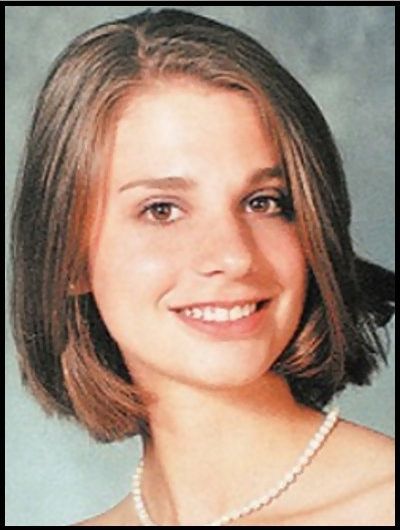
Tracie Jean Hawlett
Birth: March 3, 1982
Death: August 1, 1999
Obituary
Father: Robert H. Hawlett
Burial: Memory Hill Cemetery, Dothan, Houston County, Alabama, USA
Criminal Details
ago.alabama.gov
July 19, 2017
On Saturday, July 31, 1999, JB Hilton Green Beasley, white female and Tracie Hawlett, white female, both 17 years of age, were reported missing to the Dothan Police Department by family members. The girls were reportedly headed to a party and were last seen in Ozark, Alabama. At about 9:00 A.M. on Sunday, August 1, 1999, the vehicle they were traveling in, a black Mazda, was located on Herring Avenue in Ozark by the Ozark Police Department. It was later determined that both girls were deceased in the trunk of that vehicle; both were victims of apparent homicide.
Anyone with information on these murders is urged to contact the Alabama Attorney General’s Office, Cold Case Unit Toll Free Tip Line at (866) 419-1236 or email [email protected]. You could be eligible for a reward.
WebSleuths.com
DimeDective - March 5, 2013
I've been researching this case for the past couple of months. I've organized all the facts uncovered thus far into a sort of case file, which follows in its entirety. It is my hope that this will provide a foundation on which we can build, ignite a new conversation and bring some much-needed attention to this ice-cold case. —DD
1. ON THE WAY TO A BIRTHDAY PARTY
At approximately 10:00 p.m. on the night of Saturday, July 31, 1999, Northview High School incoming seniors J.B. Hilton Green Beasley, 17, and Tracie Jean Hawlett, 17, left their hometown of Dothan, Alabama, together in Beasley’s 1993 black Mazda 929. It was Beasley’s 17th birthday, and the friends were headed to a “field” party for her at the rural home of Beasley’s friend and fellow dancer Janna Hare in Headland, about 10 miles north of Dothan.
Earlier that evening Tracie Hawlett had finished her shift in the menswear department at J.C. Penney, left work shortly after 9:00 p.m., and went home to change clothes before Beasley, of 205 Woodleigh Road in Dothan, arrived to pick her up sometime between 9:45 and just past 10:00 at her house in the Hickory Hill Drive/Rock Spring Road neighborhood in Dothan.
The girls never arrived at the party. Carol Roberts, Tracie Hawlett’s mother, said, “They never found the party. They just couldn’t understand the directions.”
2. LOST
Beasley and Hawlett were spotted in Headland at about 10:30 p.m. Police records show that they stopped at a BP gas station near the intersection of Routes 173 and 431 in Headland, where they used one of two side-by-side pay phones to call friends, probably to get clearer directions to the party or possibly to tell friends they wouldn’t be able to make it: Hawlett’s curfew that night was 11:30 p.m., giving the girls a relatively short night out given their departure time, made all the shorter by their becoming lost.
One hour later, just after 11:30 p.m., Beasley and Hawlett turned up in Ozark -- more than 20 miles northwest of Dothan -- at the Big/Little convenience store-Chevron station located at 763 East Broad Street. The store had closed for the evening. Beasley and Hawlett encountered a woman, Marilyn Merritt, and her daughter, who had stopped to buy a soda; the girls asked for and were provided directions to U.S. Highway 231, which would take them the 20 miles southeast to Dothan. Merritt and her daughter later told police that Beasley’s car was spotless, the girls were clean and nothing seemed awry.
Using the pay phone at the far right end of the store front, Tracie Hawlett then called her mother to say they had gotten lost and wound up in Ozark but had gotten directions and were on their way home. Carol Roberts stated, “Nothing was wrong in Tracie’s voice. It was ‘Mom, I love you. Be home soon.’”
Merritt and her daughter then saw Beasley and Hawlett pull out of the parking lot and turn right toward the highway, as directed. It was the last time Beasley and Hawlett were seen alive.
3. THE NEXT MORNING
Exhausted from a double shift as a nurse's aide at Wesley Manor nursing home, Carol Roberts fell asleep after the call from her daughter. When she awoke at 5:00 a.m., Tracie had not returned. Of Tracie’s failure to return that night, Roberts stated, “Tracie’s never late. I knew that something beyond her control was keeping her from getting home.”
At 8:00 that morning, August 1, 1999, Roberts called Dothan police. Officers started to search for a possible car wreck.
At almost that exact moment, Ozark police officers found Beasley's black Mazda 929 just before 8:00 a.m., parked along Herring Avenue, about 30 yards from the James Street intersection, less than a mile from the pay phone Hawlett had used the night before. Though a residential street, the stretch of Herring Avenue where the car was found is houseless, flanked by dense woods on both sides. It is dark in the daytime and near pitch-black at night.
4. THE CAR
According to police, when the car was initially found, there were no outright signs of foul play. Police say why the girls stopped remains a mystery. They say it doesn't look like someone forced the girls off the road, since there was no damage to the car.
Though undamaged, the car was muddy and almost out of gas despite a fill-up the day before. When police found the car, the driver's side window was rolled down a few inches and the door was unlocked. J.B. Beasley’s driver's license was on the dashboard. The girls' purses were inside the car. It appeared only the car keys were missing.
5. "SOMETHING ABOUT THIS FEELS FUNNY."
Lieutenant Rex Tipton, the chief of detectives with the Ozark Police Department, was contacted by a sergeant at the Herring Avenue scene and told about the discovery.
“I don't know why I'm bothering you," the sergeant said, "but something about this feels funny.”
Tipton told the sergeant to keep an eye on the car, figuring that teenagers may have left it there after a night of partying, which would not have been unusual. The sergeant ran the car's license plates and discovered that it was registered in Dothan, the region's largest city with just under 60,000 people. He contacted police there.
The Dothan police told Tipton they were just then taking a missing person's report from Tracie's parents.
Tipton reiterated his order to keep an eye on the car.
“At that point," Tipton said, "I didn't think about popping the trunk. There was nothing to indicate anything was wrong.”
6. INSIDE THE TRUNK
Hours passed with no sign of the girls. By lunchtime, Tipton had become worried. Dothan police sent an investigator, who planned to have the car towed back to Dothan. As officers waited for a tow truck, the Dothan investigator noticed that he could open J.B.'s trunk with an inside lever; the missing keys weren't needed.
Six hours had passed since the discovery of the car. It was nearing 2:00 p.m. when he popped the trunk:
J.B. Beasley and Tracie Hawlett were inside, each dead from a single 9mm gunshot wound to the head.
7. CRIME SCENE DETAILS
They were clothed and showed few signs of struggle. Hawlett's arm was scratched, her pants had briars, and the $95 New Balance tennis shoes she had bought the week before were covered in mud. First into the trunk, she had been shot once in the temple.
Beasley had been shot once in the cheek. She was noticeably dirty; her shoes were muddy.
Both girls’ pants were wet below the knee.
A single 9mm shell casing rested precariously on Hawlett’s leg.
Robbery was quickly ruled out as a motive when it was confirmed that not only the girls’ purses but also their jewelry, money, and credit cards were all found inside the car.
The only known missing item is Beasley’s key chain, which holds the car’s keys. It is described as having white blocks with black letters that have a heart on one and spell out “HARD2GET.”
An autopsy revealed that the girls had not been raped and had no alcohol or drugs in their bodies.
Authorities were able to determine that the girls had not been murdered where the car was parked on Herring Avenue.
A palm print was recovered from the trunk lid.
More than two months after the crime, a stunning revelation came from state forensics examiners: They found semen on J.B. Beasley’s bra, panties, and skin. Authorities consider this discovery the key to the unsolved murders.
"You have to assume it's a sex offense, or at least came out of a sex offense," said David Emery, the district attorney of Dale and Geneva counties. "If we could find who donated that semen, I think we'll have the killer.”
8. THE STRANGE CONFESSION OF JOHNNY WILLIAM BARRENTINE
At 11:30 p.m. on the night of July 31, 1999, at the same time Tracie Hawlett called her mother from the Big/Little Store pay phone, 28-year-old part-time mechanic Johnny William Barrentine told his young wife that he was headed out to buy milk for the couple’s 2-year-old son.
Barrentine didn’t return home until shortly before 1:00 a.m., and, according to his wife, when he came in he was visibly upset. When asked, he told her his car had been “hit by a black truck with a Dothan tag near Herring Avenue.”
In the days that followed, Barrentine would confide in others that he knew something about the murders of the two teens found on Herring Avenue . “He just said he thought he might know who did it,” said Avalyn Murphy, whose boyfriend, Leon Jordan, encouraged Barrentine to go to authorities and collect the reward.
Barrentine finally took the advice.
On September 1, exactly one month after the bodies of J.B. Beasley and Tracie Hawlett were found, Johnny Barrentine met with police for a four-hour, videotaped interview, ultimately offering six different stories and sometimes placing himself at the scene of the crime.
According to Ozark Police Chief Tony R. Spivey, Barrentine first said that on the night of the killings he'd seen a black truck speeding away from the area where the girls were found.
As the interview wore on, Barrentine changed his story several times, finally telling investigators that he'd picked up a “tattooed man” he didn't know, and the two drove by the Big/Little Store. Barrentine said the man he'd given a ride got into a car with two girls -- who Barrentine identified as “the dead girls” -- and told him to follow. He said they ended up on Herring Avenue. The man got the girls out of the car. Barrentine said he soon heard two gunshots and the man returned. Barrentine gave the man a ride away from the scene, then went home.
In another version, Barrentine confessed to investigators that the man he’d picked up and given a ride home wasn’t unknown to him at all -- it was his neighbor. Alarmingly, Barrentine lived just eight-tenths of a mile from where police found the bodies.
Police arrested Barrentine then and there, naming him the prime suspect and charging him with two counts of capital murder.
But there were problems with his account. He never mentioned sexual activity that would account for the semen found on Beasley. The neighbor he implicated had an alibi for the evening and, like Barrentine, did not match the DNA samples.
Barrentine, whose police mug shot makes him look like he might have just been startled from a slumber, immediately said he'd fabricated the whole story in hopes of scoring some quick cash.
“I didn't see anything,” he later told a grand jury. “I made up everything to get the reward money.”
“He says he was there,” Police Chief Spivey said, explaining what made Barrentine a suspect. “He relayed to us about getting the girls out of the car. One of the girls ran. The girls were combative. The individual placed the girls in the trunk. Two shots were fired. The gunman comes back to the car. Something is in his hand. He drove the gunman outside the city. He returned home.”
In a September 21 preliminary hearing, Alabama Bureau of Investigation agent Charles Huggins testified that Barrentine was able to describe the girls’ clothing and other items consistent with the girls and the crime.
Police Chief Spivey said the district attorney, who was present during the September 1 interview, instructed police to arrest Barrentine. When Barrentine’s arrest was announced at a September press conference, Spivey said police were confident they had arrested the right man.
"What do you do?" Spivey would say later. “If you don't charge him, maybe you just let a killer walk out the door. You're between a rock and a hard place.”
Barrentine was held without bond in the Dale County jail from his September 1 arrest on. In an October 18 bond hearing before Circuit Judge P.B. McLauchlin, Barrentine denied he was involved in the killings, though he had made the earlier statements to police that he watched the two 17-year-olds shot to death by an acquaintance of his who had “tattoos all over his arms.”
Barrentine told McLauchlin that he never picked up a tattooed man and that he didn't see anything the night of the murders. He said he simply went to the BP at about 11:00 p.m. to get milk for his little boy.
Barrentine was denied bond by McLauchlin, who then appointed 36-year veteran lawyer Bill Kominos to represent Barrentine.
Barrentine's friends and family stood by him, professing his innocence to anyone who would listen. “He did not do it,” his mother, Faye Barrentine, adamantly told reporters the day after her son's arrest. "He's not capable of doing it. He has a two-year-old son, and he is not capable of doing anything to hurt a child.”
Kominos would go on to say his client had obviously stumbled into a situation with investigators he wasn't capable of handling. “As a lawyer, you need to take what your client says with a grain of salt sometimes,” he said, speaking in slow, measured tones, his hands held together almost as if he were praying. “But I had a feeling from the very beginning, in viewing the car, in viewing the evidence, I said to myself, ‘No. Johnny Barrentine could not have done this.’”
The police were under intense pressure to make an arrest, Kominos contended. And that pile of reward money kept growing. It grew enough to lure Barrentine in, Kominos said.
“Well, they started. They questioned. And questioned. And questioned. Four hours,” the lawyer said, punctuating each sentence with a moment of silence. “It's all on video and the questions turn from questions to accusations. From accusations to suggestions.”
Barrentine, who had lived in Ozark for several years and was residing at 110 Young Avenue with his wife and son, said he first went to Spivey several days after the murders to tell him of a rumor. He gave Spivey a name and was told that police had already checked out the rumor and that the man Barrentine named was not a suspect.
Also several days after the murder, Barrentine reportedly said, he and his wife and brother-in-law went to the scene on Herring Street where the Beasley car was found. Barrentine said they were looking for something that might help the police solve the case.
Barrentine said he was tired when he told the story to police in the September 1 interview at the police station. He said he was interviewed for more than four hours and was not told he could go to the bathroom or could leave at any time.
Barrentine said police "tricked me" into telling the story.
At one hearing, it was reported that Barrentine finished the seventh grade and a portion of the eighth grade, and that he was in special education courses.
Daleville lawyer Joe Gallo said he didn’t believe police, who were under intense pressure to solve the case, would drop charges against Barrentine if they believed he was remotely involved. Yet Gallo offered no explanation for Barrentine's stories, except to say Barrentine suffered mild mental retardation. "You've got me," he said.
Barrentine's DNA was compared to that of the semen found on J.B. Beasley’s body.
It did not match.
A judge then approved Barrentine's bond request. He was released from jail on Friday, December 17. In January, a Dale County grand jury declined to indict Barrentine.
“Barrentine is living in Daleville now,” Kominos said at the time, “and is trying to pick up the pieces.” Kominos said no physical evidence exists that links Barrentine to the murders.
Police still consider him a suspect, Spivey said, noting that Barrentine is also alleged to have made a jailhouse confession.
Police have said Barrentine could be charged later if new evidence points to him.
9. OTHER SUSPECTS
- The Man from Michigan: A man from Michigan who was at a party the night of the murders near where the car was found is also a "very viable" suspect, Chief Spivey said, even after tests failed to match the man's DNA to that found on J.B. Beasley’s clothing. The man, whom Spivey would not name, left town within days of the murders, the chief said, adding that investigators have traveled to Michigan three times to interview him. The man cannot account for three or four hours of his time on the night of the murders, and later made "suspicious" statements to people, Spivey said. He would not elaborate on what he meant by suspicious.
- The Driver of the Small White Pickup Truck: A video surveillance camera inside the Big/Little Store caught a grainy, poor quality image of what appears to be a small white pickup truck at the gas pumps at the same time that J.B. and Tracie were at the outside phone calling Tracie's mother. The store had closed, and there was no record of a gas purchase being made at the pump by credit card or debit card at that time, Chief Spivey said. The video never reveals anyone getting out of the truck, and never clearly shows the driver. After releasing a photo of the truck to the media a month into the investigation, no one had come forward to say it was him in the truck. The truck -- and its driver -- seem to have disappeared. “So that may be the key,” Spivey said.
- The Man from Mississippi (Presumably ruled out - DNA): In early March 2000, it was reported that a DNA sample taken from a Jones County, Mississippi, man was being compared to samples taken from the body of J.B. Beasley, but Chief Spivey said no factual evidence known at the time linked the man to the brutal murders of Beasley and Hawlett. Spivey said the man, who was extradited from Jones County, had been arrested there on an outstanding warrant for possessions of drug paraphernalia issued in Ozark. The man had been staying in Ozark with relatives but left two days after the murders. Spivey said investigators wanted to question him in connection with the case. “He has been extensively interviewed and DNA samples have been obtained and sent to the forensics lab," Spivey said at the time. "But at this time we do not have any factual information to connect him to this case. We just want to be double sure that he's not involved.”
10. ABOUT THE VICTIMS
J.B. Hilton Green Beasley was born Saturday, July 31, 1982 in Troy, Alabama, to Hilton Lanier Beasley and Cheryl Stout. In 1984, her family moved to Dothan.
J.B. was an All-American Cheerleader in the 8th grade at Carver Middle School. She was active in dance for ten years and was the recipient of numerous dance trophies and awards. She was a member of the First United Methodist Church in Dothan.
Despite its brutal ending, that final Saturday evening began on a festive note. It was J. B. Beasley's 17th birthday, and there was much to celebrate. She was an up-and-coming high school senior. Her future was promising, even if her past had not been trouble-free. Her relationship with her mother was admittedly strained, and her dance instructor had become her legal guardian. Even now, Cheryl Stout-Burgoon describes her daughter as rebellious and manipulative -- albeit very smart. But others considered her spirited, including her pastor, Lawson Bryan, who called her an “extremely vivacious, friendly, outgoing person.”
Tracie Jean Hawlett was born Wednesday, March 3, 1982. She was a second-year majorette at Northview High School, as well as a beauty contest finalist. [I've had a hard time finding facts on Ms. Hawlett. I'm hoping someone can help me here. —DD]
11. INVESTIGATION: DEVELOPMENTS
Police were stumped almost from the beginning. When state and county detectives joined the hunt, more than 50 investigators were working on the case in a city with just 45 officers on its force.
An FBI suspect profiler was brought in. But the profile revealed nothing dramatic, Chief Spivey said. The profiler said the killer most likely was a young male who could be described as a loner.
2008-2009: Ozark Police Chief Tony Spivey says they have investigated new leads over the past year and a majority of those leads have taken them out of Alabama. They’ve interviewed about a dozen people according to the Chief, some in Georgia, Mississippi, Florida, Michigan, Arkansas and South Carolina. But he says they’ve come up empty-handed. Chief Spivey says it is personally frustrating that they have not found the killers but the department continues to work with the Attorney General’s Cold Case Unit and the Alabama Bureau of Investigation.
12. AGENCIES INVOLVED IN THE INVESTIGATION
- Ozark Police Department
- Alabama Bureau of Investigation
- Federal Bureau of Investigation
- Alabama State Troopers
- Dale County Sheriff’s Department
- Daleville Department of Public Safety
- Wiregrass Violent Crime/Drug Task Force
- FBI Violent Crimes Task Force
- Dothan Police Department
- Houston County Sheriff’s Department
- Alabama Department of Game and Fish
- Dale County District Attorney’s Office
- Alabama Department of Forensic Sciences
- Attorney General’s Cold Case Unit
- Richard Walters, Cold Case Investigator
- Attorney General Troy King’s Cold Case Commission
13. TELEVISION COVERAGE
- Summer 2000: Spivey contacts America’s Most Wanted. The FOX network television show had helped Ozark police catch two suspects in a 1989 murder case.
- July 28, 2007: AMW airs a segment on the Beasley-Hawlett murders.
- August 15, 2007: CourtTV’s Haunting Evidence “Wiregrass Murders” (Beasley-Hawlett murders) episode airs.
14. A WITNESS
Since the day police discovered the bodies, they have said that J.B. and Tracie were shot while inside the Mazda's trunk. And, they've said, they believed the actual shooting happened somewhere other than where the car was found.
Yet, months into the investigation, police couldn't say where that somewhere else was.
Then, in March 2000, a woman who lived just south of town reported that she heard screams and what sounded like two gunshots on the night of the murders.
The woman didn't report the information sooner because she "didn't want to get involved," Chief Spivey said.
The area, next to what neighbors said is a now-vacant house, is surrounded by trees and has two World War II-era buildings on the property. The spider-web-encrusted buildings -- wooden structures that appear to be a barn and a half-collapsed garage -- sit about 100 feet off the roadway.
With FBI help, Spivey said, crime scene specialists and investigators combed the area and found a spent 9mm shell casing, the same caliber casing found in the trunk with the bodies.
Police sent the casing and a soil sample from the area to the state forensics lab, where they still sit. [July 2000]
Tipton said forensics experts will compare the dirt from that location with dirt found on J.B.'s and Tracie's clothing.
He said they will also examine the unique "extraction marks" left on the two casings by the gun that ejected them.
Because investigators are still awaiting those test results from the forensics lab, they don't know if the scene south of town is the actual murder scene.
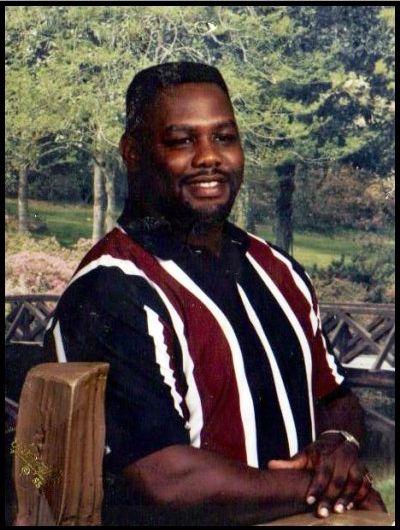
Willie Junior McGrady, II
Birth: December 19, 1967
Death: May 17, 1999
Obituary
Willie Jr. McGrady II, 31, formerly of Palatka, died Monday, May 17, 1999, at the Southeast Alabama Medical Center in Dothan, Ala.
He was a native of Dothan and was born at the Southeast Alabama Medical Center. He attended the public schools of Putnam County and graduated from Palatka High School in 1987. During his high school years, he was a standout football player, weightlifter and was also a member of the state championship wrestling team receiving numerous honors. He earned his B.S. Degree in Therapy Regulation at the University of Florida in Gainesville. Since 1995, he was employed as a juvenile probation officer in Marion County at the Department of Juvenile Justice. He was loved and well respected by many and will be dearly missed.
His father, Willie Jr. McGrady Sr. preceded him in death.
To cherish his memories are his wife, Jacqueline Danzey McGrady of Ocala; son, Master Willie Jeremiah Jacquez McGrady of Ocala; mother and step-father, Elese and Henry L. Calhoun of Palatka; brothers, Townsend "Baby Boy" Harris of Orlando, Milton McGrady of Dothan, Ala., Rakeem Calhoun of Palatka; sisters, Glory Gilyard, Lisa McGrady, Katrina (Frank) Bell, Felicia Wilson, Montoya (Lawrence) Sharpe, all of Palatka, Francis McGrady, Keisha McGrady, both of Dothan, Ala.; grandparents, Josephine Allen, Lovata Calhoun, and Cora and Russell Miller, all of Palatka; great-grandmother, Mattie Meyers of Palatka; father-in-law and mother-in-law, Jack and Ruby Danzey of Dothan, Ala.; a host of aunts, uncles, nieces, nephews, cousins, god-daughters; other relatives and friends.
Funeral services will be held Saturday, 2 p.m. at Palatka High School, with Brother Russell Miller, officiating. Interment will be in Palatka Memorial Gardens. Flagg-Serenity Memorial Chapel is handling arrangements. (Palatka Daily News Obituary dtd 21 May 1999.)
Burial: Palatka Memorial Gardens, Palatka, Putnam County, Florida, USA
Criminal Details
No criminal details found.
Testimonials
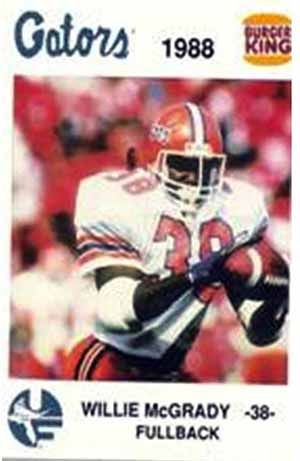 July 24, 2013:Willie J. McGrady (12/19/1968 – 5/17/1999). Willie McGrady of Palatka, Florida via Dothan, Alabama, played middle guard/ nose tackle and fullback for Galen Hall‘s Florida Gators from 1987 to 1988. At 6’3″, 247 pounds, and blessed with 4.5-speed, he was strong enough to pave the way for Emmitt Smith as blocking fullback or plow through opposingSEC offensive lines as middle guard/ nose tackle–in the same game! Willie was the first Gator to play both offense and defense in the same game since the mid-1960s when NCAA mandated two-way play for scholarship players. Willie loved hitting people so much, that he was also used on punt and kick coverage. Opposing players often remarked that they would avoid hitting him or aim for his shoelaces, because he was so solid and painful to hit. Although Emmitt Smith was a great running back in his own right, he often gives credit to Willie for paving the way during his freshman and sophomore years, most notably Emmitt’s 224-yard coming out party against Alabama in 1987. Unfortunately, Willie was diagnosed with congenital neck problems and was forced to leave the team after his sophomore season of 1988. Dejected and depressed, he wandered up and down the east coast and spent some time in prison before deciding to get his life together. He returned to University of Florida in 1992, finished his degree in therapeutic recreation in 1994, met his future wife and began his new life helping emotionally handicapped kids. Tragically, Willie was shot and killed in May of 1999.
Jonathan Lamont Tolbert
Birth: August 20, 1976
Death: April 20, 1999
Obituary
No obituary found.
The Augusta Chronicle
Columbia County Bureau - April 21, 1999
View on Chronicle.August.com
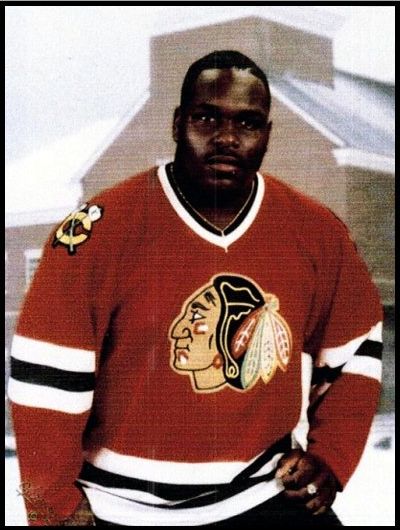
McDuffie County sheriff's deputies found a young black male dead from an apparent gunshot wound to the head on Interstate 20 Tuesday afternoon.
The body was discovered after the Georgia State Patrol received a call around 1 p.m. that there was an abandoned car near mile marker 168 on I-20, said McDuffie County Sheriff Logan Marshall.
"The state patrol got involved at the scene of the crime after they got a call from a respondent," Sheriff Marshall said. "We don't know where the call came from."
Sheriff Marshall said the victim was found in the back seat of a Chevrolet Impala with a gunshot wound to his temple. The rear windshield of the car was shattered, where the bullet apparently exited the car.
Police would not release the victim's identity because relatives had not been notified. They said there did not appear to have been any robbery.
FBI agents suspect that the victim may be the gunman in the murder of a 22-year-old Alabama man that occurred late Monday afternoon.
Jonathan Lamont Tolbert, 22, of Troy, Ala., was shot and killed Monday evening while looking at cars with a friend at The Lemon Car Lot in Fort Rucker, Ala.
Two black males in a small, green vehicle with North Carolina tags stopped to talk to Mr. Tolbert and his friend, and at some point one of the men pulled a gun and shot Mr. Tolbert, according to FBI agents assigned to the case.
After the shooting, the suspect who fired the gun left in Mr. Tolbert's 1995 black Chevrolet Impala SS, Alabama tag 55BF874, while the other suspect left in the green car. Mr. Tolbert's friend was unharmed, said FBI agents.
The suspect who shot Mr. Tolbert was described as a black male with slender build, wearing blue jeans, a white short-sleeved shirt and black boots.
The description of the shooter matches that of the victim found in McDuffie County in Mr. Tolbert's black Impala.
A gun similar to the one used in the shooting death of Tolbert was found under the body, said FBI agents.
McDuffie County authorities on the scene would not say whether foul play was suspected or if the two deaths were related.
"We are aware of the situation in Alabama, but right now, we are not absolutely sure that the two are connected," said John Seay, the Georgia Bureau of Investigation agent in charge. "We are looking into the possibility that there is a connection, but we expect to know more tomorrow."
Barbara Kim Fannin
Birth: May 18, 1961
Death: November 23, 1998
Obituary
Burial: Green Hills Memorial Cemetery, Troy, Pike County, Alabama, USA
Criminal Details
No Criminal Details
Kimberly Kay Zachary
Birth: August 23, 1969
Death: October 27, 1998
Obituary
No obituary found.
Burial: Bluff Springs Baptist Church Cemetery, Ashford, Houston County, Alabama, USA
No criminal information found.
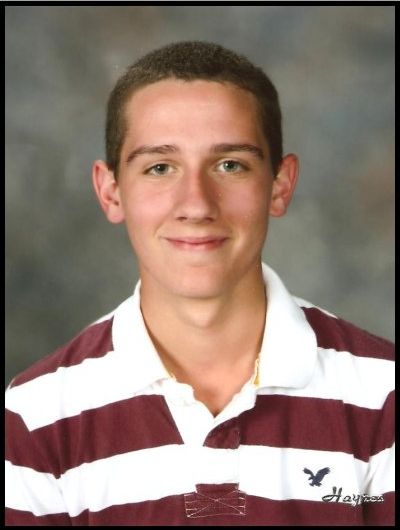
Joseph William 'Joey' Drescher, II
Birth: August 23, 1969
Death: October 27, 1998
Obituary
Joseph William (Joey) Drescher, II, a resident of the Tumbleton community, died Thursday morning, Jan. 3, 2008, in a hunting accident which occurred near Shorterville in Henry County. He was 15.
Funeral services will be held at 1 p.m. Sunday, Jan. 6, in the Holman-Headland Mortuary Chapel with Reverend Larry Adams officiating. Burial will follow in the Balkum Cemetery. The family will receive friends from 3:30 until 5:30 p.m. today at the mortuary in Headland. Joey Drescher was a lifelong resident of the Tumbleton Community in Henry County. He was a ninth grade student at Headland High School and formerly participated in the Junior Varsity football program. Joey attended the New Zion Free Will Baptist Church and also had attended the Henryville United Methodist Church in Guntersville, Alabama where he was an acolyte.
Surviving relatives include his father, Joseph William Drescher and his step-mother, Sheryl Drescher, Tumbleton Community; his mother, Katrina Snellgrove Ready, Dothan; two sisters, Amanda Drescher and Hannah Snellgrove, Dothan; two brothers, Donnie Howard, Norwich, Conn.; Keaton Ready, Dothan; grandparents, Donald and Vivian Drescher, Guntersville; Loyd Snellgrove, Jr. and Vickie Snellgrove, Dothan; Becky Simkins and Bob Simkins, Atlanta, GA.; great-grandparents, Jeanette Jones, Dothan; Agnes Brannon, Dothan; Lloyd Snellgrove, Sr., Midland City; aunts and uncles, Heather Morgan and husband, Jonathan Morgan, Midland City; Dray Yarbrough and wife, Janet Yarbrough, Dothan; Brenda Henderson and husband, Ray Henderson, Dothan; Sally Drescher Carter and husband, Tom Carter, Headland; Greg Drescher, Midland City; several cousins, great aunts and great uncles, a nephew, Cameron Howard, Dothan; a special great uncle, Ronald G. Thompson, Kingston, Tenn.
Serving as active pallbearers will be Lucas Oates, Chris Prather, Michael Newman, Mike Wilson, Dusty Kirkpatrick and Steven Scroggins.
Holman-Headland Mortuary, (334) 693-3371, is in charge of arrangements.
Burial: Balkum Baptist Church Cemetery, Balkum, Henry County, Alabama, USA
Criminal Details
The Dothan Eagle
Lance Griffin - Jan. 4, 2008
Traumatized, tearful and perhaps tormented, 18-year-old Michael Newman sat in a tiny interrogation room at the Henry County Sheriff’s Department, a little more than two hours after he told deputies he was shooting at a deer when the bullet missed, then struck and killed his hunting buddy, 15-year-old Joey Drescher of Tumbleton.
Something wasn’t adding up. Deputies trying to re-create the shooting at the scene — just off Henry County Road 91 in Shorterville — couldn’t quite see how Newman could have shot toward a deer at the angle he said he was in, and hit Drescher where he was found dead.
Pushing further, the deputy asked Newman if he was willing to submit to a polygraph examination.
That’s when authorities say Newman changed his story. The shooting was accidental, he said, but he didn’t miss a deer in plain view and hit Drescher, who could not be seen in the background. Newman told deputies he simply shot at movement in a pine thicket. He thought the movement was a deer, but the shot from his .270 caliber rifle struck Drescher in the chest. Newman said he ran frantically out of the woods, found his grandfather, and the two went to a nearby store to call police.
Newman was charged with manslaughter later Thursday. He posted a $5,000 bond.
Drescher was pronounced dead at the scene around 9:30 a.m., about four hours after the two friends walked into the woods on a frigid Thursday morning.
Houston County Sheriff Will Maddox, a former Henry County game warden, said Drescher was wearing a hunter orange cap, but it was covered up by a hooded coat.
The law requires all hunters less than 12 feet off the ground to have on hunter orange. It must be visible from 360 degrees around.
Newman told police he thought Drescher was in a nearby tree stand.
“You have to constantly communicate,” Maddox said. “If they had had some communication, and if the victim had had hunter orange visible, he may still be here, alive today.”
Alabama law requires all hunting deaths to be investigated by the grand jury. The next grand jury is scheduled to convene in March, where it will determine whether to indict Newman on the manslaughter charge.
Maddox said Newman — also of Tumbleton — was “sick and distraught” over the accidental shooting of his friend. He said the two were close friends and had been hunting together many times.
Funeral arrangements for Drescher are being handled by Holman-Headland Mortuary.